

An SMS short code is a 5- or 6-digit number businesses use to send high-volume text messages for marketing, authentication (OTPs), and customer alerts. Unlike a standard 10-digit phone number, short codes are pre-approved by mobile carriers, support 100+ messages per second, and are easy for customers to remember. In this complete guide, you will learn how SMS short codes work, the four types available, how to register one, compliance rules for India, GCC and global markets, and real examples from brands like Chipotle, Starbucks, and Facebook. Let’s get started.
What Is an SMS Short Code? (Definition, Examples & How It Works)
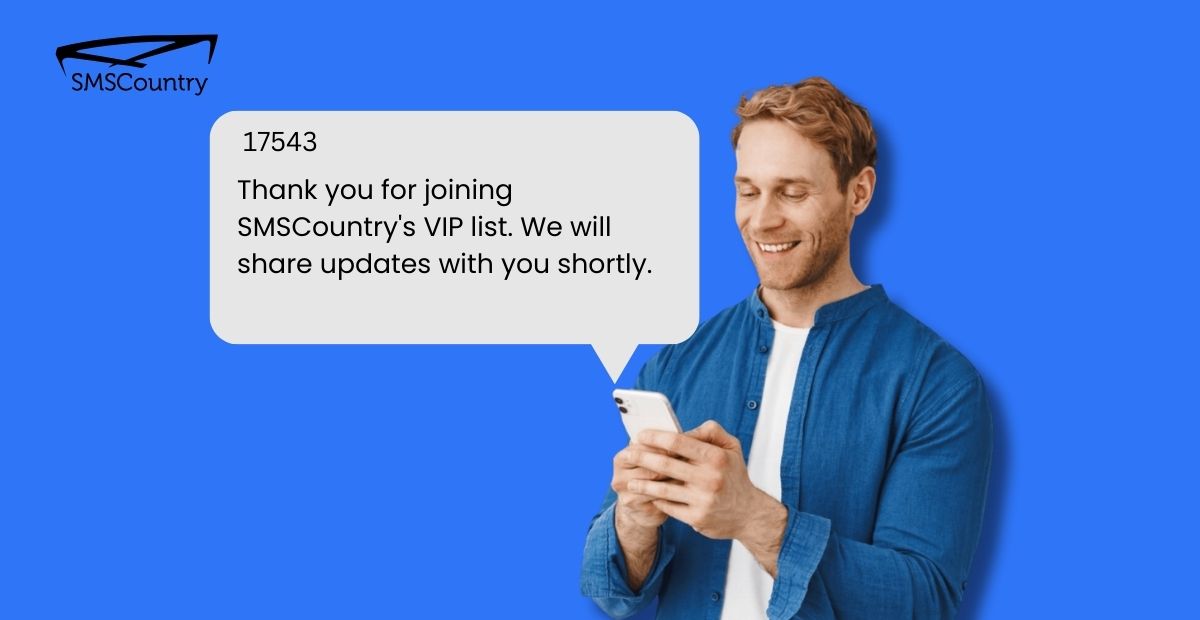
SMS short code is a 5 or 6-digit number you see when you receive a marketing message from a brand. Short codes are the standard delivery channel for Application-to-Person (A2P) messaging — where a business application sends automated messages to a mobile subscriber. Because short codes are pre-vetted by carriers, they are far less likely to be filtered as spam.
These numbers support two-way messaging. However, organisations practically use them to send marketing messages to their consumers.
As the number is short, it is easy to remember. Shortcodes can also handle a high volume of SMS compared to a traditional number.
That’s because they work slightly differently than traditional numbers do.
| SMSCountry is the best bulk SMS service to serve your customers SMS short codes. Learn more about our SMS services. |
How Do SMS Short Codes Work? A Step-by-Step Breakdown
SMS service providers sell shortcodes like any traditional numbers.
Here is what you need to do to make them work for you:
Step 1: Register Your SMS Short Code with a Provider
Get yours from a service provider or wireless carrier. Apply for a specific short code matching your business name and await approval.
Step 2: Choose and Register an SMS Keyword
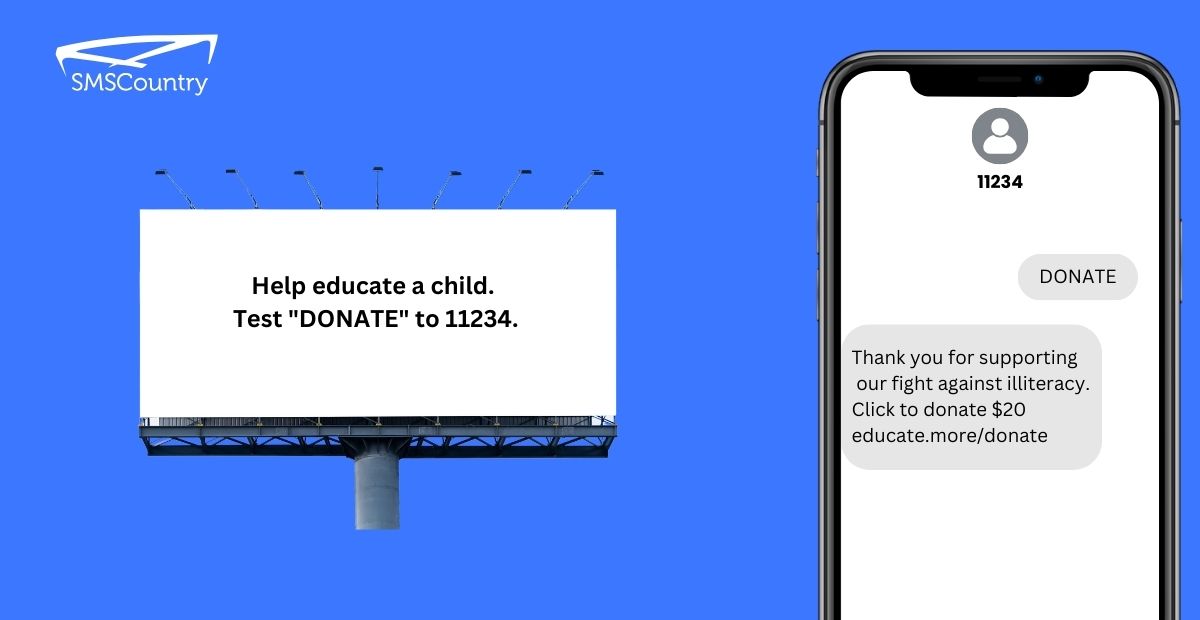
Keywords start predefined action. To maximise the functionality of your short code, use easy keywords. For example, you can use the keyword “DONATE” to prompt customers to donate to your cause.
Step 3: Advertise Your Short Code and Keyword
Create a campaign that showcases the short code and the keyword. For example, you can start a fundraising drive with the “DONATE” keyword.
Step 4: How Message Processing Works
As your customer hits ‘Send’, the message is sent to the service provider. The provider routes it to the appropriate location predefined by the business rules.
Step 5: Automate or Send Your Response to Customers
You can automate or send manual responses to your customer once they SMS you. These responses can provide requested information or trigger specific actions based on keywords.
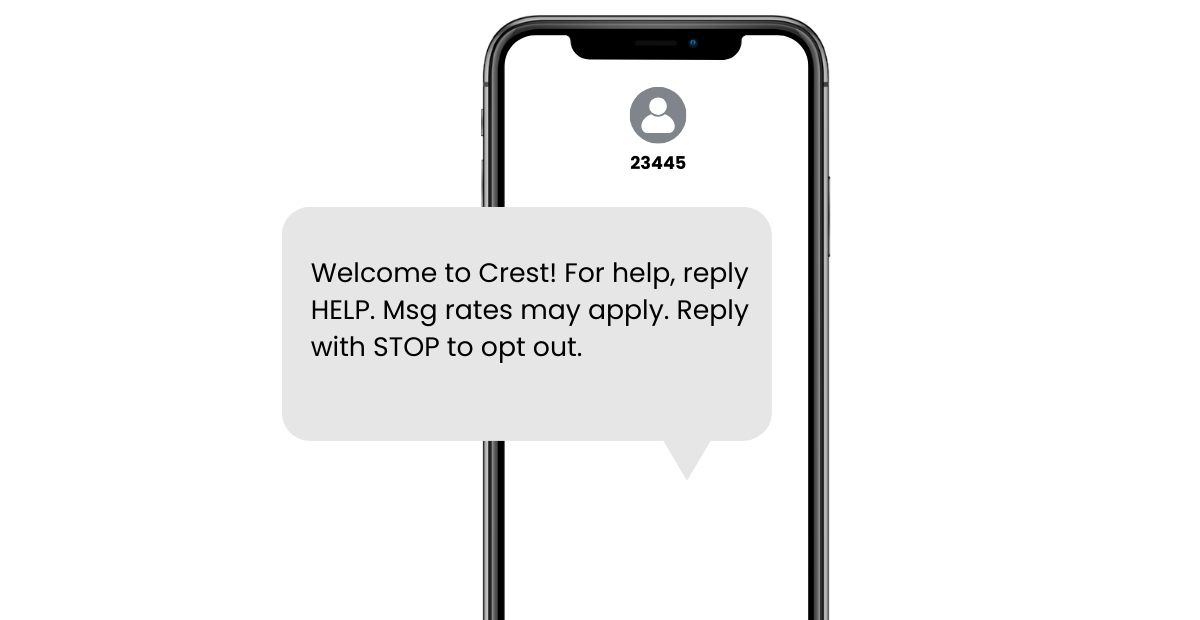
Your customers pay for the messages they send while using SMS codes. It’s a good idea to provide an opt-out mechanism. This gives them the freedom to unsubscribe when it gets overwhelming or expensive.
An ideal way to do this is to give them the “STOP” or “UNSUB” option at the end of each message.
7 Key Benefits of SMS Short Codes for Business Marketing
You can send hundreds of customers the same SMS with SMS short codes.
But what else does it help you with?
- Increasing your reach: Mobile phones are accessible to most countries’ populations.
- Improving customer response rate: SMS messages have higher open and response rates than other channels. This helps in resonating your message with your target audience.
- Offer real-time communication: This includes feedback, customer support, or timely information dissemination.
- Versatile use: You can use shortcodes for many applications. These include marketing campaigns, promotions, information services, customer engagement, event registration and surveys.
- Offers scalability: SMS short codes can send 100 or more messages per second — far exceeding the 1 MPS limit of a standard long code. This makes them the only practical option for flash sales, OTP delivery, or emergency broadcasts where delays cost conversions. Large enterprises often run campaigns sending millions of messages in a single hour using a dedicated short code.
- Offers a branding opportunity: A unique code reinforces brand recognition and customer loyalty for your brand.
- Offers a cost-effective option: SMS short codes are cheaper than other channels. They offer a higher return on investment.
In short, you get measurable results in the shortest amount of time.
It’s a great asset compared to a traditional number if you plan to use it for marketing purposes.
SMS Short Code vs Long Code: Key Differences (Comparison Table)
The traditional cell number is easier to get and use. But the shortcode takes your marketing game to a different level.
How?
SMS short codes are designed for high-volume, branded business messaging, while traditional long codes are better suited for personal or small-scale two-way communication.
We outlined the salient differences between the two in the following table.
SMS short codes are purpose-built for high-volume branded business messaging, while traditional long codes are better suited for personal or small-scale two-way communication.
| Traditional Cell Numbers | Short Codes | |
| Format | 10-digit number | 5 or 6-digit number |
| Purpose | Personal communication | Business communication, marketing campaigns, information services |
| Accessibility | Used by individuals | Used by businesses/organisations |
| Keyword Integration | N/A | Keywords associated with campaigns trigger specific actions |
| Two-Way Communication | Yes | Limited |
| Cost | Standard messaging rates apply | Customers are billed for messages sent or received |
| Scalability | Limited | Capable of handling high message volumes for mass communication |
| Branding | Not specific to any brand | Brand association with short code |
| Opt-Out Mechanism | N/A | Required by regulation |
| Analytics and Tracking | N/A | Integration with analytics tools offers tracking and analytics |
| Customisation | N/A | Customisation offers more control over messaging |
| Application in daily life | Personal messaging and calls | Marketing campaigns, promotions, information services, customer engagement |
Even though they differ, they both have a place in your organisation.
You can’t use short codes to call your employees. And using traditional numbers to send marketing messages may cost you an arm and a leg with no real ROI.
Now, let’s look at the types of SMS short codes that exist.
Yes. There are a few of them.
Choosing the suitable SMS short codes for your business means complying with local telecom and SMS laws.
Most countries have their own set of laws. However, the types of SMS short codes available for sale are the same.
Dedicated SMS Short Code: Exclusive Use for a Single Business
A dedicated short code is a unique and exclusive code assigned to a single business. Dedicated short codes are expensive but provide greater control and branding opportunities.
Large enterprises prefer investing in dedicated short codes across different regions.
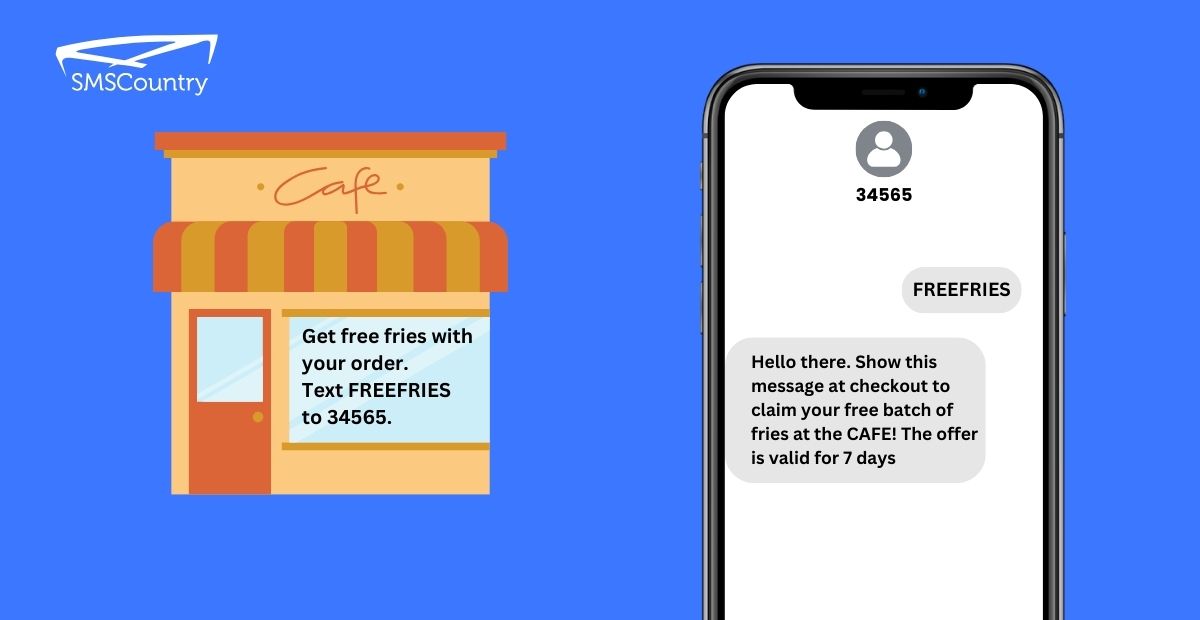
Shared SMS short codes are numbers shared among many businesses. Each business uses a unique keyword to distinguish its messages.
Shared short codes are cost-effective. They are suitable for businesses that have lower messaging volumes.
If you are looking for an affordable option, you can use a shared SMS short code.
Beware, though, these short codes limit your branding options. They can also create confusion among receivers. Also, if messages are incorrectly created, they can cause unintended opt-outs.
Important Update: Major US carriers began phasing out shared short codes in 2021 due to spam and compliance risks. As of now, most carriers no longer approve new shared short code applications. If you are currently using a shared short code, consider migrating to a dedicated short code or a 10DLC number. Businesses in India and the GCC should check with their local SMS provider for current availability.
Vanity SMS Short Code: Memorable, Brand-Aligned Numbers (e.g. 711711)
Vanity SMS short codes turn a word or phrase into a series of numbers. They are also available in an aesthetically appealing sequence.
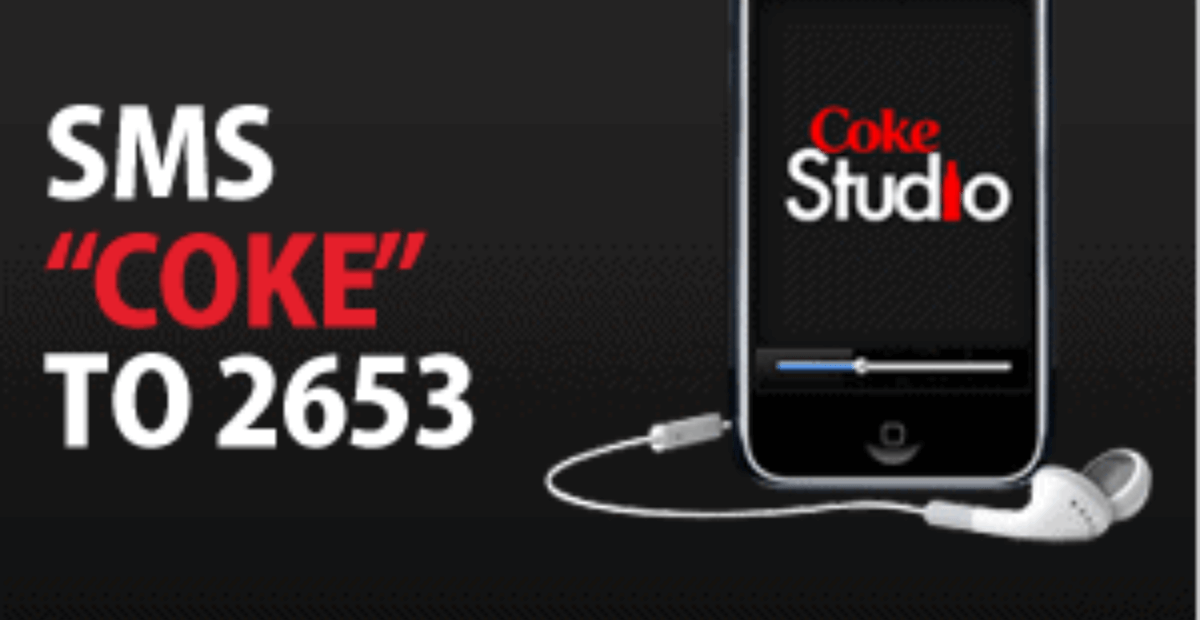
Source: tatango.com
Seven-Eleven used 711711 with multiple keywords like purple, peace and America.
So, is vanity code worth it?
The main advantage of using one is recall. A repeating sequence of numbers reinforces brand identity. This can lead to better open rates.
But vanity in all forms comes with a price tag. And so it happens with SMS short codes.
Vanity short codes are expensive and limited in availability. And countries can restrict its use by placing specific guidelines.
If you want a vanity code, contact SMSCountry. We’d help you understand the specific requirements of your target region.
Non-Vanity (Random) SMS Short Codes: Cost-Effective Alternative
Non-vanity SMS short codes are also called random short codes.
These SMS codes are randomly assigned or selected based on availability. They do not have any association with a specific brand or keyword.
Compared to vanity short codes, non-vanity short codes are easier to acquire. They are cheaper and ideal for businesses with lower messaging volumes.
But there is a catch. Non-vanity SMS short codes are not as memorable as vanity codes.
But you can create catchy campaigns by combining them with keywords and clear Call-to-Actions (CTA)s.
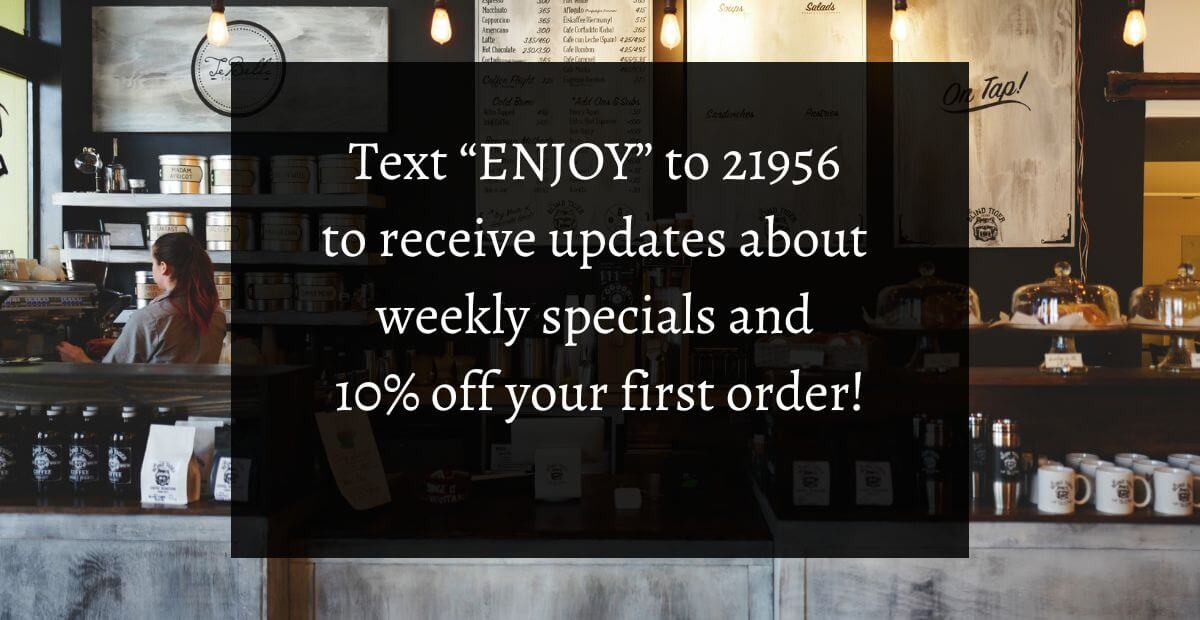
Random SMS short codes are also governed by regulations. These may be different from the ones for vanity codes. Talk to your SMS service provider to learn the specifics.
SMS Short Code Regulations: Compliance Rules for India, GCC & Global Markets
Before you set out to buy your new SMS short code, learn how SMS regulations work. This will put you ahead of your competition. The key regulatory bodies governing SMS short codes vary by region. In the United States, campaigns must comply with the Telephone Consumer Protection Act (TCPA) and guidelines set by the Cellular Telecommunications Industry Association (CTIA). In India, the Telecom Regulatory Authority of India (TRAI) governs bulk SMS through the DLT (Distributed Ledger Technology) platform. In the UAE and GCC, the Telecommunications and Digital Government Regulatory Authority (TDRA) applies. Understanding which body governs your target market is the first compliance step.
Some SMS regulations common to India and GCC countries:
- Consent for promotional SMS: Get your customers’ permission before sending promotional SMSes. Consent can be explicit or implied, but you should document and record it.
- Do-Not-Disturb (DND): The “Do-Not-Disturb” registry gives individuals the right to opt out. Run a DND status check on your number list and refrain from messaging these numbers.
- Sender identification: Businesses need to identify themselves as senders. Include your business name and registered Sender ID when SMSing to confirm the SMS is from you.
- Opt-out SMS: Provide your customers with an easy and free opt-out system in every SMS. Clearly state the unsubscribing words. Use capital letters so your subscribers can find them and start the opt-out process.
- Unsolicited Commercial Communication (UCC): UCC, also known as spam, is strictly prohibited. Promotional SMS sent without consent violate regulations. This makes you liable for fines and suspension of SMS services.
- Time restrictions: Look for specific time windows to send promotional SMS. Sending SMS outside these hours can lead to a fine.
- Content Restrictions: Check out the content restrictions for your country. In UAE, SMS about gambling and adults is not allowed. While in India, you cannot send more than 6 SMS from the same number and ID.
Find the SMS regulation in different countries
6 SMS Short Code Best Practices Every Business Should Follow
As you start working with SMS short codes, make errors and learn from them, things become more evident.
| Use SMSCountry to send fast and personalized messages via SMS or WhatsApp. See how it works and schedule a quick demo or sign up. |
But it’s always good to have a starting point and a set of best practices in mind regardless of where you work.
Here are six of them.
1. Stay Compliant with SMS Short Code Regulations in Your Country
As mentioned in the previous section, non-compliance with regulations is not recommended. It can land you in hot waters with regulatory authorities.
The first place to start is the country you want to start using SMS short codes. Familiarise yourself with the guidelines and stay updated with the changes that occur.
You can sign up for updates on local regulatory websites for this purpose.
Next is your content. Offensive content can get you blacklisted or, worse, suspended.
Also, keep in mind cultural sensitivities. And do not provide misleading information through your campaigns.
If unsure, consult an SMS service provider like SMSCountry to double-check your content.
But that’s not all.
Your content needs to adhere to privacy laws. Ensure you steer clear of DND numbers and do not share customer numbers with third parties. Protect your customer information and ensure it is used only for marketing purposes.
2. Use Your Brand Name as Your SMS Short Code
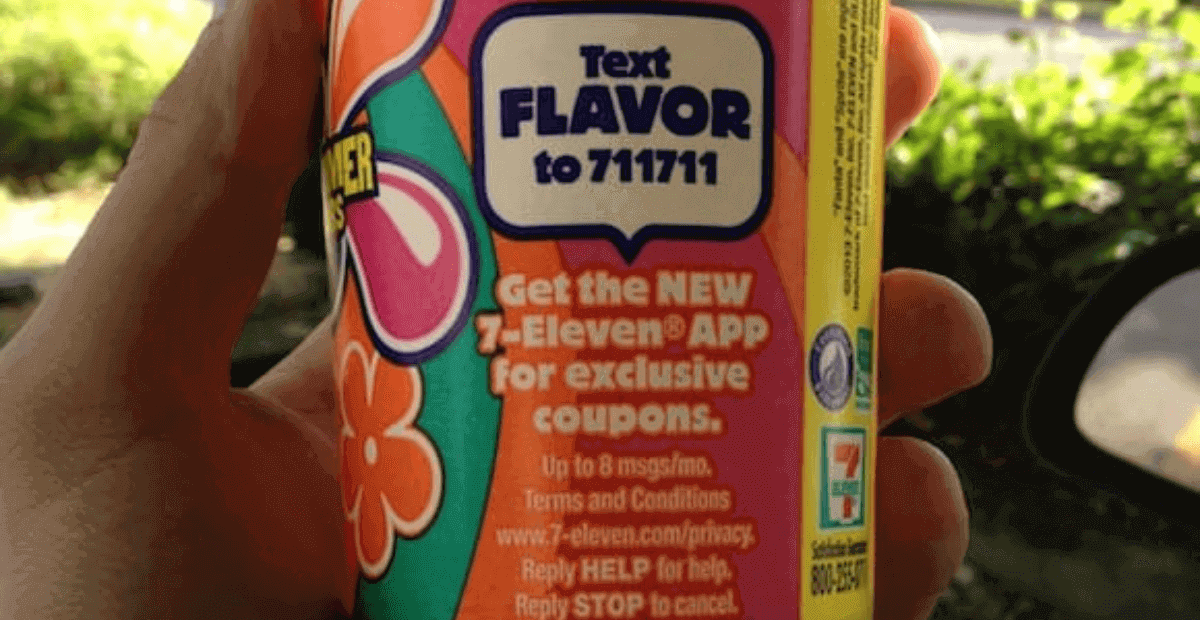
Source: tatango.com
Using your brand name as an SMS short code is an effective way to create a special connection.
To start, research the availability of your brand name as a short code. Mobile network operators or SMS service providers manage short codes.
Inquire about the availability of your preferred short code for texting. Also, ask them what is the process to purchase it.
Next, ensure your SMS short code is not breaking local laws.
Now, start building your campaign. Align your messaging and visuals with your brand identity. Create a consistent tone and voice to reinforce your brand image. Create a balanced customer experience across all touch points.
Display your branded SMS short code as the Sender ID prominently as you run your SMS campaign. You can also add your brand name at the end of the message to establish trust with recipients.
3. Make Your SMS Short Code Easy to Remember
Is there a quick way to occupy real estate in the minds of your customers?
Yes, there are a few.
Aim for concise SMS short codes. We know they are already short- the point here is to choose something simple and intuitive.
Also, SMS short codes that align with your branding are more memorable. Like vanity codes.
But what if you randomly got assigned a short code?
An excellent way to reinforce memory is to use visual cues alongside your SMS short codes. Add your brand logo or an icon to give your customers’ memory something to latch on to.
Another part of the SMS your customers will remember is the campaign and content they read. Make it engaging and share-worthy so that recipients can’t wait to forward, share and talk about it.
4. Promote Your SMS Short Code Across Multiple Channels to Drive Opt-Ins
Once you have your campaign and SMS short code, you can’t wait to tell the world about it.
Here are a few advertising strategies to encourage opt-ins as you go all in:
- Have a multi-channel approach: You can use as many channels to promote your SMS short code campaign as you want. Use your website, social media platforms, email newsletters, print materials, and in-store signage.
- Create mobile-friendly forms: Add mobile-optimised opt-in forms and landing pages. The process of subscribing should be simple and user-friendly. Also, streamline the form across all channels.
- Use QR codes: QR codes help increase opt-ins. Use QR codes on print material such as posters, brochures and product packaging. These QR codes can lead customers to the landing page or opt-in form.
- Create influencer partnerships: Influencer partnerships help increase visibility and credibility. Collaborate with influencers who can endorse your SMS short code campaign.
- Use email marketing: Send your SMS short code campaigns to your existing email lists. Also, include a clear CTA and opt-in instructions in the email to maximise opt-ins.
- Find offline events: Find events that allow promoting SMS short codes. You can look into conferences, trade shows, and community gatherings. Create banners, posters, or signage that display the details of your campaign.
- Word-of-mouth referrals: The plain old- asking your existing subscribers to refer people. But do offer incentives to your customers for such referrals. This will create a viral effect and expand your subscriber base.
5. Always Get Explicit Customer Consent Before Sending SMS
By now, customer consent should be a core aspect of your SMS strategy. But if it isn’t, here is how you can get it.
Getting consent for promotional messages is a requirement in most countries. Check your target country’s SMS regulations before you hit ‘Send’.
Once you do that, see that the language you use for opt-in is clear. You need to state what your customer is opting in to.
For example, if you intend to send your customers updates, refrain from using the same opt-in for promotions. Share a new message with your customers asking for their permission to do so.
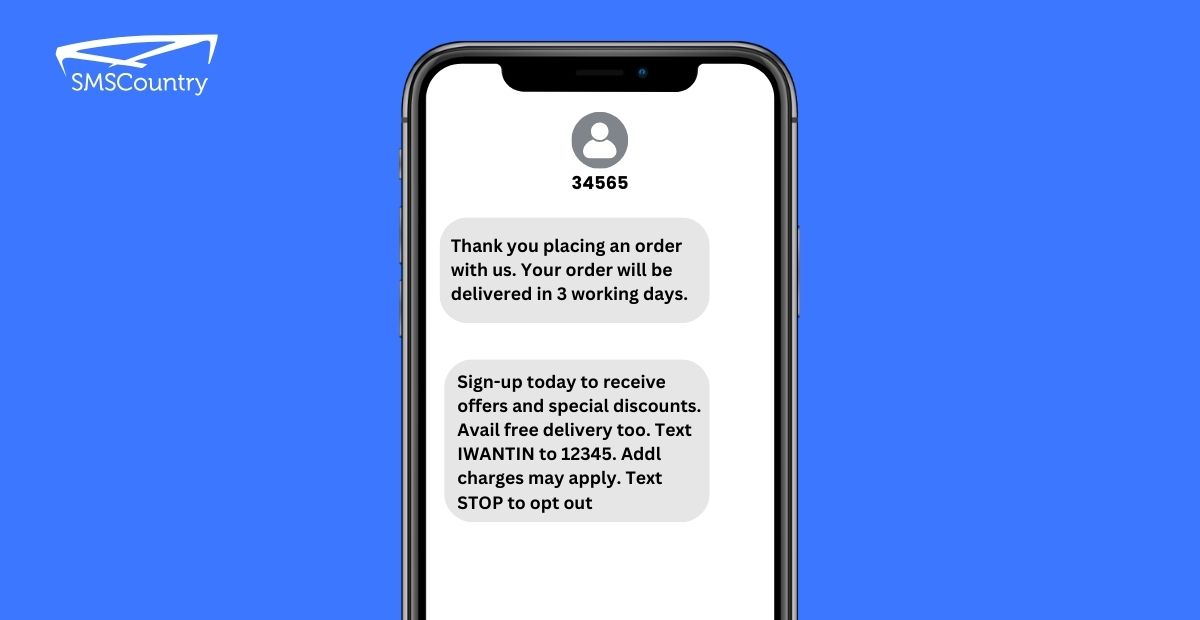
The best way to collect opt-ins is online. You have a ton of audience and virtually no boundaries to whom you can reach. This means you also need forms that are easy to navigate.
We think the checkbox is the simplest solution. However, you still need to give a disclaimer to your potential customer.
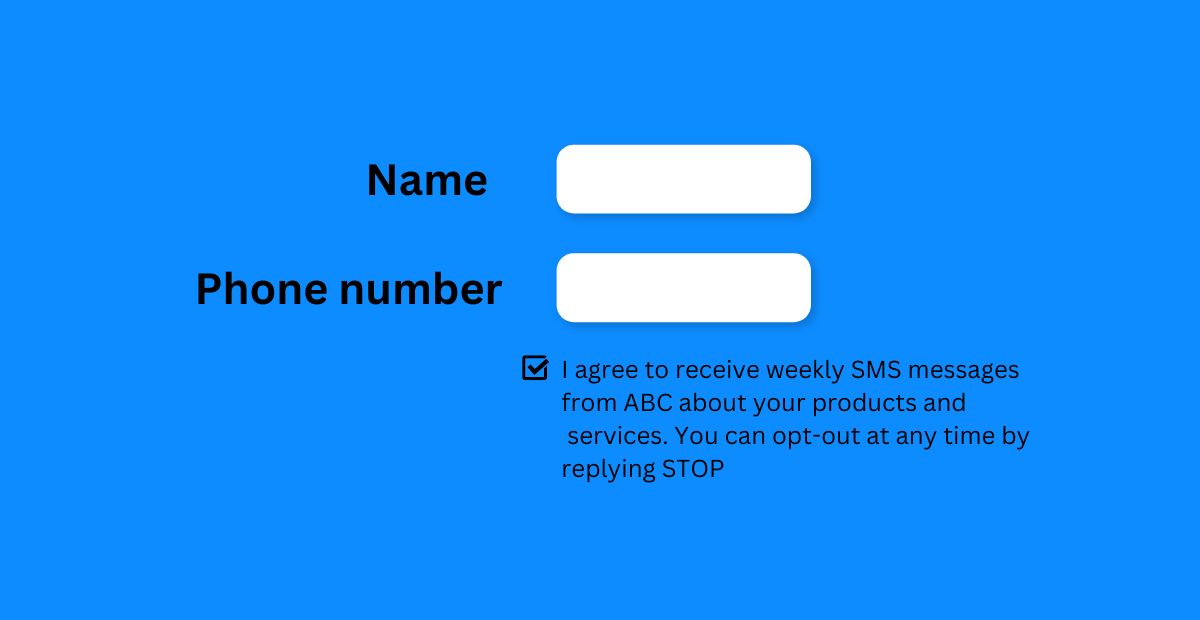
If you run an e-commerce store, you can incorporate this optional box on the checkout page. This will send your customers updates about their orders.
| Are you confused about which service providers are on the top? Here you can find a list of top service providers so that you can make an informed choice, delight your customers, and multiply your revenue. |
6. Conduct Periodic Audits of Your SMS Short Code Campaigns
Conduct periodic reviews of your SMS short code campaigns to ensure ongoing compliance. Also, track and address any complaints you receive during this period.
11 Common Uses of SMS Short Codes for Businesses
Here are 11 common uses of SMS short codes.
- Marketing campaigns: Use SMS short codes to promote products or services. You can engage your customers through targeted messaging. You can also distribute exclusive offers and coupons.
- On-demand information: You can use SMS short codes to send weather updates and news alerts. SMS short codes can also deliver traffic updates and sports scores.
- Text-to-donate services: Short codes are helpful for organisations that conduct donation drives. Ask your supporters to make pledges by sending a text message to the short code.
- Voting sessions: You can buy an SMS short code to conduct a poll. Share the number and keyword with your participants so they can cast their votes.
- Subscription services: You can add an SMS short code for subscription services. Ask your customers to subscribe to updates, alerts and your newsletter by opting in.
- Lead generation: Use your SMS short codes with subscription services. Urge your customers to text a keyword to a short code to opt-in and receive specific information.
- Loyalty programs: You can use SMS short codes to update your customers about their status. Send them messages about their points earned, new rewards, or access exclusive benefits.
- Appointment scheduling: You can share or confirm/reschedule existing appointments. This use case is helpful if you run a clinic or a hospital.
- Account notifications: As a bank, you can send account notifications, balance updates, payment reminders, or transaction alerts to customers using short codes.
- Ordering and delivery updates: You can use SMS short codes to inform customers about their orders and deliveries.
- Emergency alerts: Educational institutes and government authorities can send alerts using short codes. These include weather warnings, safety instructions, or evacuation notices.
Real Brand Examples: How Chipotle, Starbucks & Facebook Use SMS Short Codes
Many well-known brands use SMS short codes to get an edge. Here are some examples.
Chipotle: Using SMS Short Codes to Recover Brand Trust
Chipotle is a chain of restaurants specialising in tacos and burritos made to order in front of customers.
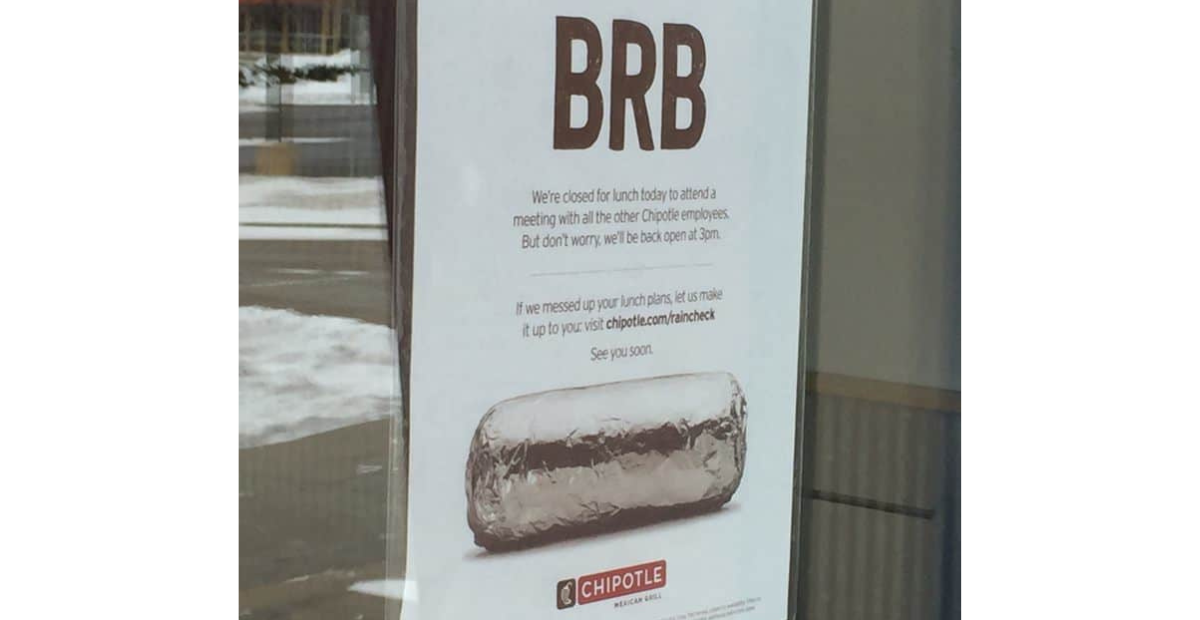
In 2016, the chain came under scrutiny for outbreaks of food-borne illnesses. The team at Chipotle decided to close its doors one Monday in February for a Food Safety Meeting for the entire team.
But they did not let this opportunity go by.
They hung this advertisement on the doors of closed restaurants.
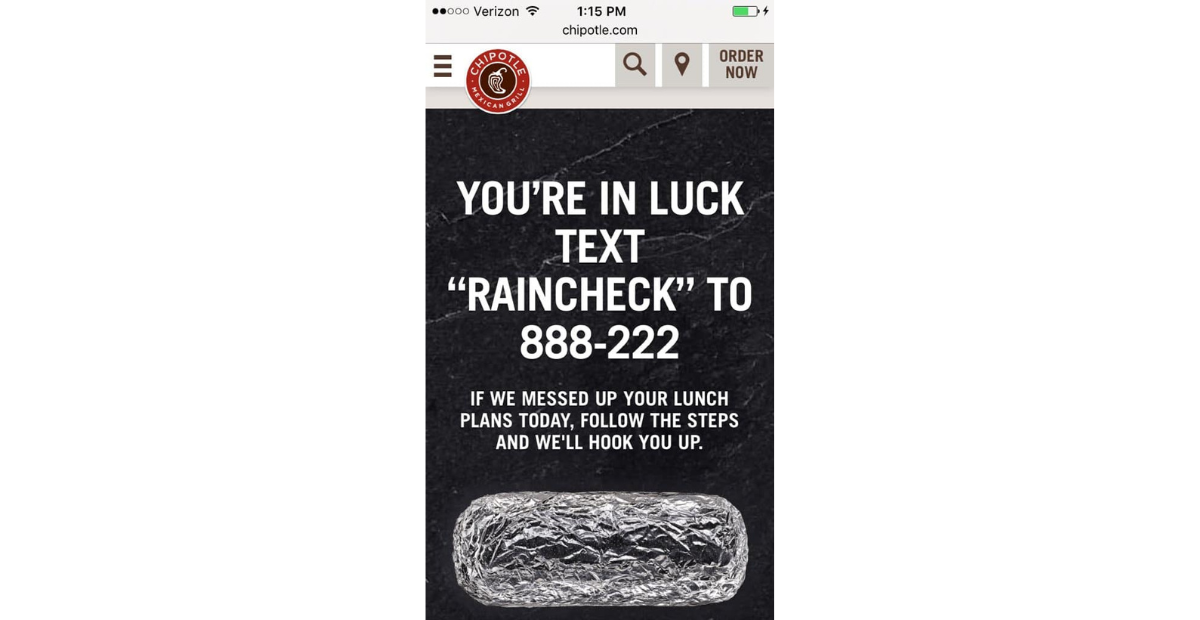
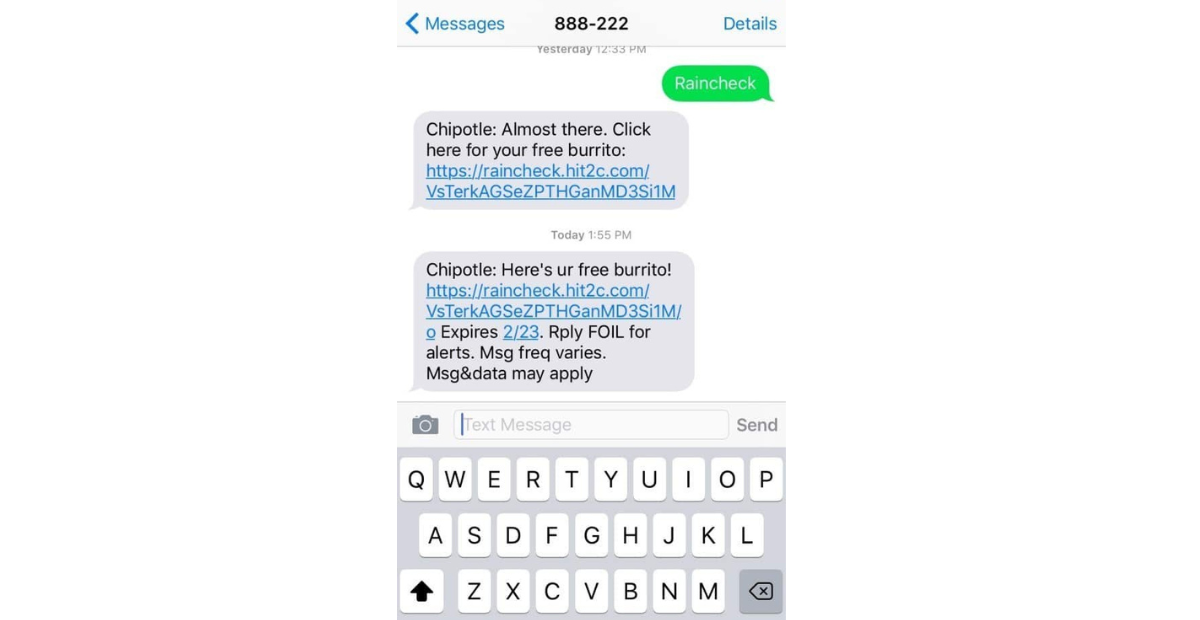
As people got on to their website, they were greeted with an SMS short code and keyword that got them free burritos.
After texting, they received the following SMS, leading them to a landing page to enter their details.
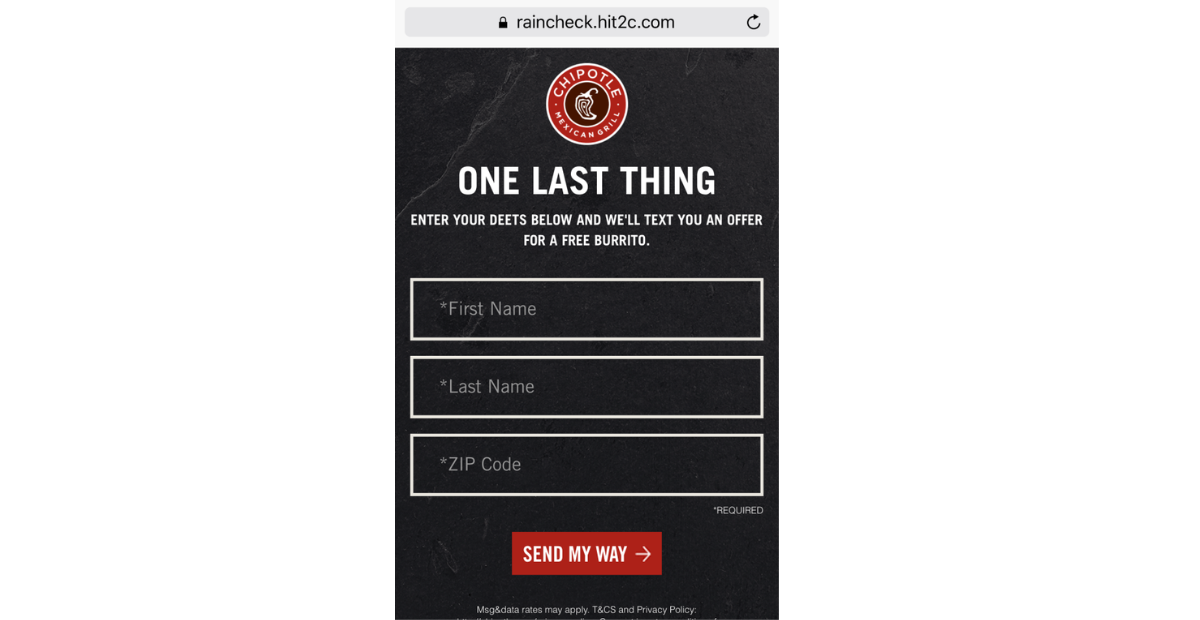
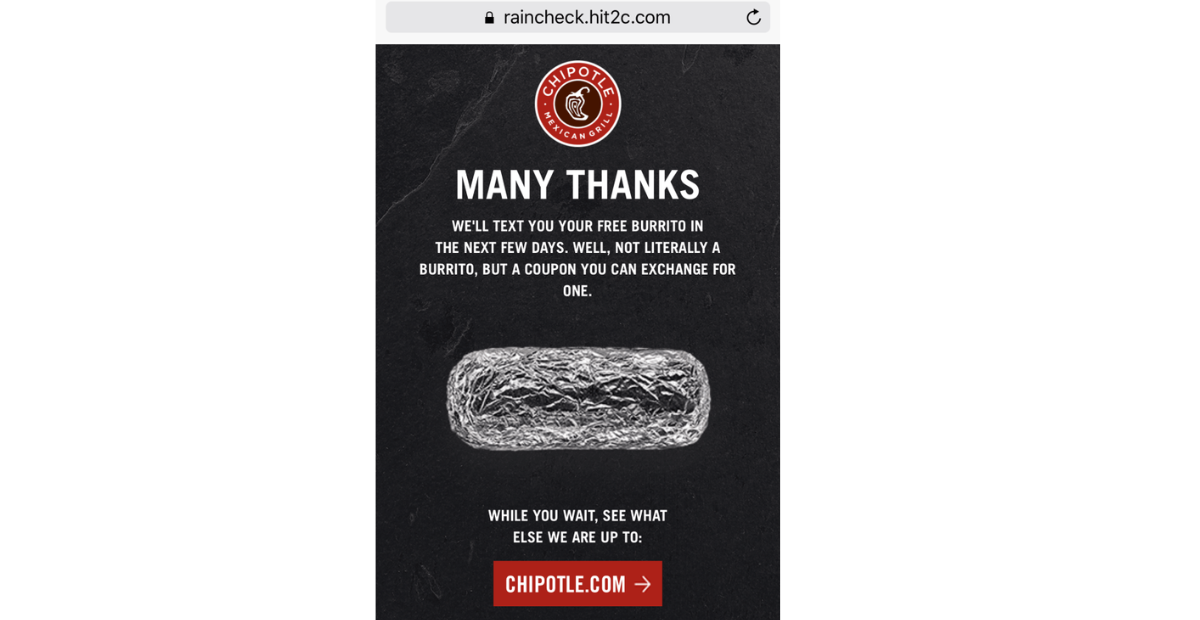
As they entered their details, they received their free burritos. And the company kept their customers.
Facebook (32665 / FBOOK): Short Code for Customer Support
Facebook is a well-known social media platform. But people do run into problems with even the best.
To sort out such problems, Facebook launched a helpline in 2014. The number 32665 (FBOOK) is a way for Facebook to reach out to its users who opted for this service.
To opt out, you can send “STOP” as a response or change your settings.
Starbucks (22122): Building a 20 Million-Member Loyalty Program via SMS
Starbucks is not new to SMS marketing. In 2014, they put out marketing banners in their cafes urging people to sign up for their loyalty program. All you had to do was send a message with your email ID to 22122.

The Starbucks loyalty program has grown in popularity over the years. As of April 2021, the program boasts over 20 million subscribers in the US alone.
How to Get an SMS Short Code: Step-by-Step Registration Guide

Ready to get your own SMS short code? Here is exactly what to do, step by step – from choosing the right code type to launching your first campaign. The process typically takes 6–10 weeks from application to live, so start early.
- Research and plan: Outline the purpose and objectives your SMS short code will achieve. Also, look at the available keywords and campaign ideas for your targeted region.
- Choose a provider: Consider pricing, reliability, customer support, features, and the provider’s experience. Shortlist your favourite providers and choose one. In the US, short codes are leased through the Common Short Code Administration (CSCA) -your provider will submit the application on your behalf. In India, registration goes through the TRAI DLT platform.
- Apply for the SMS short code: Contact your chosen provider to start the application. Provide them with your information, the reason for purchasing the short code and contact details.
- Select your keyword: Shortlist the keywords you want to use for your campaign. Choose relevant and easy-to-remember keywords that align with your brand. For example, the keyword “DRESS” suits a clothing brand.
- Wait for approval: Submit your application. The process will ensure you are in compliance with the laws. Also, it will verify short code and keyword availability in the region.
- Run the campaign: Once you receive approval, you can start integration. Add the keyword and SMS short code in your marketing materials and website to start using them.
But before you can roll out the functionality for general use, test it. This will save you a lot of time and embarrassment.
In the next section, we discuss how to do this.
How to Test Your SMS Short Code Before Launch: A 3-Step Process
Follow these steps.
Step 1: Set Up Your SMS Short Code Testing Environment
Set up test accounts, create sample data, and replicate the messaging flow.
Step 2: Test Deliverability, Keywords, Opt-Outs & Response Flows
There is no correct testing sequence. Your testing sequence will depend on the variables most important for your campaign. For example, if deliverability and opt-out mechanisms are essential, your testing sequence will highlight them.
Here, we outline a generic testing sequence.
Select some test accounts and send a message to them to test for deliverability and routing.
Once you establish a route, add as many mobile devices as possible in your test environment. This will help you establish compatibility.
Next, test for character limit and media support. Send messages of all character lengths, and note where your SMS are cut off.
Keywords are an essential part of SMS short code campaigns. To test their effectiveness, get some people to give you feedback on your campaign. Send them messages and observe how your test subjects respond. You can also supply them with a short questionnaire to gauge their responses.
Make adjustments to your campaign as you receive feedback.
Next is the response mechanism.
How do you intend to communicate with your customers when they respond to the SMS code? Will it be automated or manual?
Test for both. Send your test subjects the responses and verify receipt. For example, if your subjects signed up for updates, verify receipt of dummy updates.
The last bit is the opt-out mechanism. Send your test subjects messages with the opt-out keywords, like “STOP” or “UNSUBSCRIBE”.
At this point, your route and deliverability should be verified. Hence, your test subjects should be able to respond ideally.
As soon as the test subjects opt out, ensure the system delists them.
Step 3: Run Integration, Load & Exception Testing
Call all your technical support team for this.
The technical backend is where your SMS short code works without you knowing it. Hence, testing system integration for seamless data flow and communication is essential.
But systems have tons of messages to process per second.
So test the performance of your SMS short code under high message volumes.
Create workflows and scenarios where your system has to send and handle many SMSes simultaneously. Note how your system delivers, responds, and the overall system stability.
But exceptions and errors can happen out of the blue. Your customers may respond ideally.
So, create messages with invalid formats, incorrect keywords, or other error scenarios to see how the system handles it.
As you go about testing your system, document all your results. Include all the issues and areas for improvement. Provide this feedback to your SMS short code provider. Also, send them your suggestions for enhancements.
Once you have tested out your system, you are all set for launch. The next step is to define KPIs for your campaign.
Let’s take a look at some.
How to Measure SMS Short Code Campaign Success: 9 Key KPIs
To measure the success of your campaign, you need to set out some KPIs. Can you just copy the KPIs that some hot brands use?
Copying KPIs off a brand may give you a solid starting point. But unless you have the same business with the same audience, expect different results.
An alternative is to gather information on all metrics. Then, select the ones that help you reach your marketing goals.
So, for example, if your marketing goal is to increase brand awareness, then response and opt-in rates may be important KPIs.
Here are some essential SMS KPIs for your SMS short code tracking and measurement:
- Conversion rate: The percentage of recipients who took the required action after getting the SMS.
- Response rate: The percentage of recipients who engaged the SMS.
- Click-through rate (CTR): The percentage of clients who clicked on the CTA.
- Opt-in rate: The percentage of recipients who opt-in to receive further info.
- Delivery rate: The percentage of SMS successfully delivered to recipients’ mobile devices.
- Revenue generated: Direct revenue was generated from the short text code campaign.
- Opt-out rate: The percentage of recipients who unsubscribed from further communications.
- Cost per conversion: Acquiring a customer through the SMS short code campaign.
- Redemption rate: The percentage of people who took advantage of an offer.
If you have run campaigns previously, you have collected data on some metrics. Add all the metrics to a spreadsheet and connect them to a data visualisation tool. This will help you establish a baseline to work from.
Sift through the visualisation to find out any past trends. Such trends will help you answer questions about your current short code texting campaign.
As you build a successful campaign, it can come under the radar of miscreants. Let’s look at how to protect your account from such people.
Since SMS short codes do not have any built-in security, you need to set them up externally.
Here are a few ways you can go about this:
- Add 2FA and strong passwords to your SMS marketing platforms and short code management system. Also, limit the authorised personnel so you know who is accessing the system.
- Install all security patches as you receive software update notifications.
- Install vulnerability assessment systems to detect unauthorised access to the system. This system will also help you monitor your system and send a report to your provider.
- Perform periodic security audits and assessments of your short code systems. This helps you identify potential vulnerabilities and address them proactively.
- Choose reputable SMS short code providers that follow the best practices. Such providers will have strong security measures.
Limitations of SMS Short Codes: What to Know Before You Commit
SMS short codes also present certain limitations. Let’s look at them:
- The messages are limited to 160 characters. This restricts the amount of information you can convey in a single SMS.
- SMS short codes support only text-based messages. They do not support multimedia content.
- SMS short codes also support limited formatting options. This limits your branding opportunities.
- Tracking links in messages is only possible via link shorteners. Compared to other platforms, this offers limited tracking analytics.
- SMS short codes rely on mobile coverage. In areas with limited networks, this will impact your reach.
- Unlike email, you can not store SMS indefinitely on the recipient’s devices. Once read or deleted, they lose their ability to be referred back to.
Even with these limitations, SMS short codes present an opportunity for quick rewards.
You can maximise these opportunities by avoiding common mistakes many others succumb to.
6 Common SMS Short Code Mistakes to Avoid (And How to Fix Them)
Anything that annoys your customer will leave a bad taste, so here are some issues and ways to fix them.
Mistake 1: No Clear Call-to-Action in Your SMS
We are calling out the elephant in the room. Failing to provide a clear and compelling call-to-action in your SMS can backfire. This is because your customers would not know what to do with the message they received.
The fix is to tell your customers what you want them to do.
Don’t be shy.
Use action-oriented language, such as “Text ‘JOIN’ to 12345 to receive exclusive offers”.
Mistake 2: Sending Too Many or Irrelevant Messages
Bombarding your customers with too many or irrelevant messages is not recommended. It will push them to opt-out to regain peace of mind.
It also creates a negative image of your brand.
The fix: Use segmentation and only send targeted messages. Personalise the SMS and refrain from messaging when people are busy or sleeping. Also, mind the time zone your customer is living in.
Mistake 3: Overcomplicating the Opt-In Process
When was the last time you saw a lengthy opt-in form? What was the first thought that came to your mind?
Adding too many steps, cross-linking and lengthy landing pages discourages your potential customer.
The fix is to simplify, simplify, simplify.
Use three interlinked assets (landing pages, forms, and social media). Add clear instructions and use your keywords to get the opt-ins.
Mistake 4: Missing or Weak Branding in Your SMS Campaign
Your customers need to associate your SMS short code with your brand. But without clear branding elements, they can not form a strong mental connection.
The fix?
Add your brand name at the end of the SMS. Also, add visual elements to your print advertisement to create brand recall.
Mistake 5: Ignoring Campaign Tracking and Analytics Tools
Most service providers give you some reporting and tracking tools. Use it.
Use the tools your provider provides even if you have your own installed. You may find differences in the reports. This will help you identify areas of improvement you were previously unaware of.
What’s the point of having an SMS short code if you aren’t available anyway?
The fix: Create a system within your business that can handle such queries. Provide helpful responses on time to build trust and maintain positive customer relationships.
How to Choose the Right SMS Short Code Provider: What to Look For
You need a reliable delivery and coverage partner to get the most out of your SMS short code. Plus, they should offer competitive pricing and excellent customer support.
At SMSCountry, we are all about quality service and reliable partnerships. While we do not offer short code services as part of our SMS messaging suite, our team can help you with the process. Contact us today!
If SMS and WhatsApp are a big part of your messaging channel, we’ve got you covered. Whether it’s OTP, alerts, updates, promotional SMS or WhatsApp messages.
We provide you with a fast, secure and reliable SMS and WhatsApp API and platform backed by 24/7 customer support to delight your customers everywhere, at scale, via personalised SMS messages.
Schedule a free demo to discover more and get started.
TL;DR
- SMS short code applications include marketing campaigns, promotions, information services, customer engagement, event registration, and surveys: SMS short codes have many applications. Explore the possibilities and use them to achieve your business goals.
- Create memorable campaigns that showcase your short code and keywords.
- Automate or send manual responses to customers. Provide timely and helpful responses to your customers to build trust.
- Don’t forget to take your customers’ explicit consent for short code opt-ins.
- Conduct periodic reviews of your SMS short code campaigns to ensure ongoing compliance.
- Enrol staff in training programs about SMS marketing and best practices. Qualified staff can help you build high compliance and trust with your customers.
SMS Short Code FAQs: Your Top Questions Answered
An SMS short code is a 5–6 digit number designed for high-volume, one-way business messaging such as marketing campaigns and OTPs. A long code (10-digit) is suited for lower-volume, two-way personalised communication. Short codes support faster throughput but cost significantly more than long codes.
Getting a dedicated SMS short code approved typically takes 6–10 weeks. The timeline depends on the country, carrier review workload, and whether your application is complete. Vanity short codes may take longer due to availability checks. Apply well in advance of your campaign launch date.
Non-compliance with SMS short code regulations can result in: immediate service suspension by your carrier, financial fines from regulatory authorities, potential legal action for repeat violations, and long-term damage to brand reputation. In India and GCC, TRAI and the TRA have the authority to blacklist sender IDs permanently.
An SMS short code is either 5 or 6 digits long. This shorter format – compared to a standard 10-digit phone number – makes it easier for customers to remember and type, and allows businesses to send a much higher volume of messages per second than a regular number.
Yes – while the numeric part of an SMS short code is fixed, you can customise the experience through keywords. Vanity short codes (e.g., 711711) let you choose a memorable number. Keywords allow you to trigger different campaigns, flows, or actions from a single short code.”
SMS short code costs typically include: a monthly lease fee ($500/month for a random code, $1,000/month for a vanity code in the US), a one-time carrier setup fee, and per-message charges. In India and GCC, costs vary by provider. Contact your SMS provider for region-specific pricing.
You can use the following options in conjunction with SMS short codes:
Opt-in subscriptions
Transactional notifications
Promotional offers
Surveys
Contests and Sweepstakes.
The time it takes to set up an SMS short code depends on the approval. The approval is subject to the workload of the regulatory authority.
Once you receive approval, your provider will set up the routing and additional services you need. Working with a reputable short code provider and staying informed about the requirements in your country will help you get ahead smoothly.
No – SMS short codes are country-specific. Each country has its own telecom regulator and short code registry, so businesses operating in multiple regions must register separate short codes for each country. Check with your SMS provider for availability and local compliance requirements in each target market.
Here are the steps your customers can take to opt-in:
Customer finds a promo: Promos on websites, social media, print materials, or in-store show customers how to opt-in. They see the SMS short code and keyword in the promo.
Customer creates an SMS: The customer initiates the opt-in process by composing a text message on their mobile device. They enter the specified keyword in the message body.
Customer hits send: Once the customer sends the keyword to the short code, the message is transmitted to the SMS short code provider. The short code provider receives and processes the opt-in request.
Confirmation: Upon receiving the opt-in message, your business sends out an automated reply to the customer. This confirms their subscription.
Customer opted-in: The opt-in process is complete once the customer receives the confirmation message. From this point onward, the customer expects an SMS from your business on the SMS short code.
Businesses provide customers with an opt-out keyword to unsubscribe from SMS messages.
Customers can compose a text message on their mobile device, write the keyword in the body and send it.
Common opt-out keywords include “STOP,” “UNSUBSCRIBE,” or “QUIT.”
By law in most countries (including India and GCC), businesses must include a clear opt-out keyword in every promotional SMS.” This adds regulatory context which improves E-E-A-T.
SMS short codes inherently do not provide encryption or advanced security features. They are primarily a means of communication and identification within the SMS system.
But businesses can and do add end-to-end encryption for sensitive messages. They also use secure data transmission protocols for web-based interactions. And implement 2FA for systems and retrieving sensitive info.
The timeline varies from a few weeks to several months. It is advisable to start the process well in advance. This will give you ample time for application, review, and any necessary adjustments.
A dedicated SMS short code is a 5- or 6-digit number exclusively assigned to one business. Unlike shared codes, no other company uses it simultaneously. This gives the business full control over keywords, messaging, and branding – making it the preferred choice for large-scale, high-volume SMS campaigns.
A dedicated short code is exclusive to one business; a shared short code is used by multiple businesses via different keywords. The key differences include usage, ownership, branding, cost, and control – with dedicated codes offering more customisation and compliance control, while shared codes are more affordable for lower-volume needs.
Here is what you must do:
Familiarise yourself with the relevant SMS regulations in your targeted jurisdiction.
Get explicit consent from recipients before sending them SMSes. Use an opt-in process where customers willingly subscribe.
Provide a simple and easy opt-out mechanism for recipients to unsubscribe. Honour the opt-out requests.
Ensure your SMS content complies with regulations and industry guidelines. Avoid misleading content and identify your business as the sender.
Respect recipients’ privacy and send SMS at appropriate times. Limiting the frequency of messages.
Laws and guidelines may evolve. So keep yourself informed about any changes or updates in SMS marketing regulations.
SMS short codes support large volumes of messages per second. However, your provider may offer varying levels of throughput. Please discuss this with them directly.
Ask your service provider for the integration options. Standard integration methods include APIs, webhooks, or third-party platforms.
You can use variables in your SMS messages to dynamically insert customer-specific information. For example, you can include a tag like “[FirstName]” in your message. The subscriber’s actual first name will replace this tag when the SMS is sent.
Also, you can divide your subscribers into segments based on preset criteria. Then, create content for each segment. Use location-based segmenting if you have the relevant data set.
You can also use past behaviour to send personalised offers or exclusive discounts.
You can use the following when not using SMS short codes:
Long codes (10-digit): Standard phone numbers for low-volume, two-way personalised messaging. Best for small businesses and customer support. 10DLC (10-Digit Long Code): A registered long code pre-approved by carriers for business use. 10DLC offers a middle ground — lower cost than a dedicated short code, better deliverability than an unregistered long code, and throughput of around 10 messages per second. It is the recommended option for small-to-medium businesses in the US and Canada who do not need the full throughput of a short code.
Messaging apps: WhatsApp and Facebook Messenger offer multimedia, group chats, and chatbots. But, the availability and popularity of specific messaging apps can vary by region.
Chatbots: An automated version of your agents that texts customers. You can integrate chatbots into various applications like websites and mobile apps. Chatbots offer scalability and 24/7 availability.
Push notifications: They are short pop-ups sent directly to your customer’s mobile device. They are not traditional SMS but are highly engaging and effective. You can deliver time-sensitive updates, promotions, and alerts.
Email Marketing: Email marketing allows extensive content and reaches a broader audience. It can complement SMS efforts in sending a detailed message and customer engagement.
Broadcast: Sending pre-recorded voice messages to a list of contacts is useful for making announcements. You can also send reminders or urgent information to a large audience.
A vanity SMS short code is a custom 5- or 6-digit number that a business selects to be memorable or brand-aligned – for example, 711711 (used by Seven-Eleven). Unlike randomly assigned codes, vanity codes are chosen by the business and cost more (typically $1,000+/month) but generate stronger brand recall.
An SMS short code keyword is a word or phrase customers text to a short code number to trigger a specific action – such as subscribing to a list, entering a contest, or receiving information. For example, texting “DONATE” to 12345 can initiate a donation flow. Keywords make short codes interactive and campaign-specific.
SMS short codes typically support 100 or more messages per second (MPS), compared to just 1 MPS for standard long codes and around 10 MPS for toll-free numbers. This high throughput makes short codes the preferred choice for time-sensitive bulk campaigns such as flash sales, OTPs, and emergency alerts.
A vanity short code is a number you choose yourself (e.g., 711711) for brand alignment and memorability. A random (non-vanity) short code is automatically assigned to you. Both offer the same technical capabilities and carrier throughput -the only differences are cost (vanity codes cost more) and memorability.

